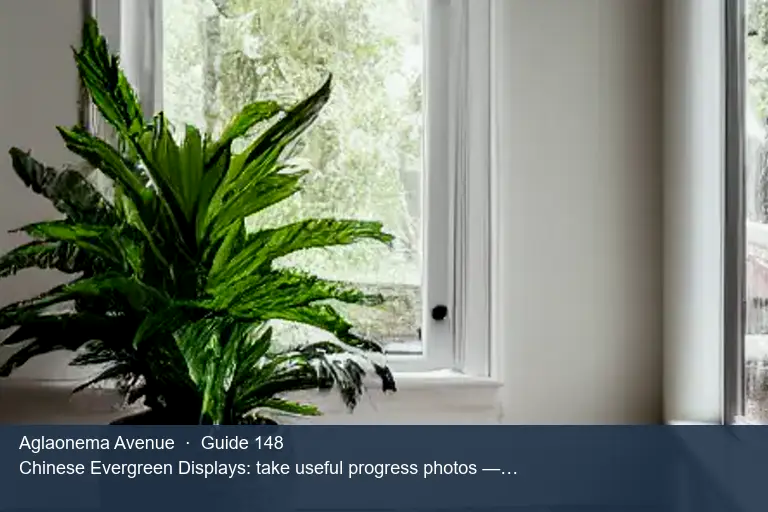
Chinese Evergreen Displays: take useful progress photos — question guide for a short care session; setup over six weeks
Chinese evergreen displays have become a popular trend in recent years, with their evergreen nature and the ability to stand year-round in a variety of environments. These displays are made from a combination of materials such as plastic, wood, and glass, giving them a unique aesthetic appeal and durability. They are also known for their longevity in different climates and conditions. However, they can be a bit challenging to take useful photos for, especially if the displays are not always in direct sunlight. The good news is that there are steps that can be taken to improve your photos. Here’s how to take useful progress photos for Chinese evergreen displays:
Step 1: Clear the background The first step is to clear the background of the display, so that any shadows or reflections can be minimized. This can be done by using a white background or by covering the display with a white sheet or cloth. This will help to eliminate any shadows that might be cast on the display.
Step 2: Position the display Next, position the display in a position that is not directly exposed to sunlight. This will help to ensure that any shadows that may be cast on the display are minimized. It is best to position the display at a distance from the light source, so that it is not directly exposed to the sun. This will also help to ensure that any shadows that may be cast on the display are minimized.
Step 3: Use a low angle Finally, use a low angle to capture the display. This is best done by taking the display with a low angle, so that the display is not directly exposed to the sun. It is also best to use a low angle, so that the display is not directly exposed to the sun.
By following these steps, you can take useful progress photos for Chinese evergreen displays, even when the display is not always in direct sunlight. Remember to always take care of the display by using a white background, positioning it at a distance from the light source, and using a low angle to capture the display.