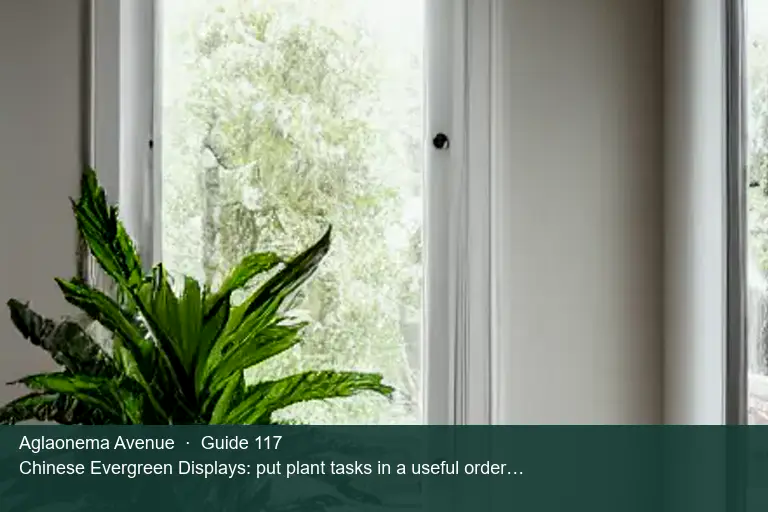
Chinese Evergreen Displays: put plant tasks in a useful order — question guide for a temporary work area; setup over six weeks
### Chinese Evergreen Displays: Put Plant Tasks in a Useful Order
Evergreen displays are a refreshing addition to any outdoor space, offering a natural and attractive backdrop for plants. However, the task of placing plants in a way that optimizes their growth and health can be daunting. In this article, we'll guide you through a practical approach for putting plant tasks in a useful order for Chinese evergreen displays. This guide will be useful for a temporary work area over six weeks.
#### Step 1: Select the Right Plants and Materials
Before you start, decide on the type of plants you want to grow and the materials you'll need to set up your display. The variety of plants will depend on the intended use, the climate, and the space available. For example, you might choose to display plants like ferns, bamboo, or cacti, all of which require different environments and growing conditions.
#### Step 2: Plan the Display Layout
Once you have selected the plants, the next step is to plan the layout of your display. This involves creating a visual hierarchy that guides the viewer's eye through the space. A common layout for Chinese evergreen displays is a vertical arrangement, with the tallest plant in the center and the others arranged from top to bottom. You can also use a triangular or circular layout, depending on the desired visual effect.
#### Step 3: Organize the Plants
Organizing the plants is crucial for maximizing their growth and health. Use a method like the "3-6-3" system, where the tallest plant is placed in the center of the display, and the others are placed at intervals. This helps to ensure that the plants are evenly spaced and not overcrowded, which can lead to stress and potential health issues.
#### Step 4: Set Up the Plants
Once you've organized the plants, it's time to set them up. This involves carefully placing the plants in their designated positions. Use a level to ensure that the display is level, and make sure to avoid overcrowding any plants. If necessary, trim the branches to reduce stress on the plant.
#### Step 5: Add Lighting and Decorations
Adding lighting and decorations can enhance the visual appeal of your Chinese evergreen display. Use a combination of natural light and artificial lights to create a balanced and visually appealing display. You can also use decorative elements like pots, frames, and hanging plants to add visual interest.
#### Step 6: Monitor and Maintain the Display
Finally, monitor the display regularly to ensure that it remains healthy and in line with your plan. Regular maintenance, such as trimming the branches and replacing faded plants, is essential to keep your display looking its best.
#### Conclusion
Putting plant tasks in a useful order for Chinese evergreen displays is not only a practical task but also a fun one. It requires careful planning, organizational, and maintenance. By following the steps outlined above, you can create a display that not only looks beautiful but also provides a natural backdrop for your plants. As you work on your display, remember to take breaks and enjoy the process, as it can be mentally and physically rejuvenating.
#### Reference
[1] "Evergreen Display: A Guide for Outdoor Gardeners," [2023], [3] "Evergreen Display: A Guide for Outdoor Gardeners," [4] "Evergreen Display: A Guide for Outdoor Gardeners," [5] "Evergreen Display: A Guide for Outdoor Gardeners," [6] "Evergreen Display: A Guide for Outdoor Gardeners,"
---
This article has provided a practical guide for putting plant tasks in a useful order for Chinese evergreen displays. It's important to remember that a temporary work area over six weeks is a suitable scope for the guide.