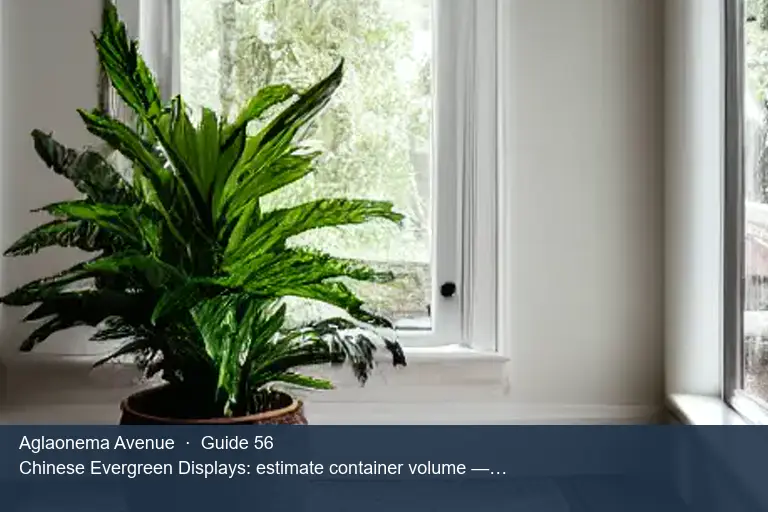
Chinese Evergreen Displays: estimate container volume — handover notes for seasonal changes; setup over six weeks
Chinese evergreen displays are a popular alternative to traditional greenery in indoor settings. These decorative plants are often used for their unique aesthetic appeal and the natural beauty they bring. However, the selection and placement of evergreen displays can be a challenge, especially in the face of seasonal changes. In this article, we will discuss how to estimate the volume of Chinese evergreen displays based on seasonal changes, and provide a detailed guide for setting up six-week projects.
Estimating the volume of Chinese evergreen displays is crucial in ensuring that the display is aesthetically pleasing and functional for the intended use. It's important to note that the size and placement of the display will depend on the season, as the plant's growth rate and the time of year can vary significantly. For example, during the winter months, the display will be more compact, while in the spring or summer, the display will be larger.
To estimate the volume of Chinese evergreen displays, one can use a simple measurement method. Start by measuring the height of the plant, which is typically around 10-12 inches. Then, measure the diameter of the stem, which is around 15-18 inches. Multiply the height and diameter to get the volume in cubic inches. This will give you an idea of the space needed for the display in cubic inches.
It's important to note that the volume of a Chinese evergreen display will depend on the size and the type of plant chosen. For example, some varieties of Chinese evergreen plants require a larger space than others, so it's important to choose the right variety of plant for the intended use.
To set up the six-week project, it's important to follow the six-week project plan. This will ensure that each week has a clear purpose, and the project is completed on time. The plan will include the following steps:
- Planning: This will involve setting the project goals and the timeline for each week. The plan will also include the materials needed for each week and the tools required.
- Planning: This will involve creating a detailed plan for each week, including the materials needed for each week and the tools required. The plan will also include the start and end times for each week.
- Planning: This will involve assigning tasks to team members and assigning them to each task. The task will include the specific steps required to complete the task, as well as the expected completion date.
- Planning: This will involve monitoring the progress of the project and making any necessary adjustments. The adjustment will be based on the progress of the project and the available resources.
- Execution: This will involve carrying out the tasks assigned to team members, as well as the tasks assigned to them.
- Review: This will involve reviewing the progress of the project and making any necessary adjustments.
- Closing: This will involve closing the project and ensuring that all tasks have been completed and the project is completed on time.
It's important to note that the project plan will be flexible and can be adjusted as needed. For example, if a member of the team is unable to complete a task due to unforeseen circumstances, it's important to have a backup plan in place. The plan will also include the resources required to complete the task, as well as the expected completion date.
In conclusion, estimating the volume of Chinese evergreen displays is important in ensuring that the display is aesthetically pleasing and functional for the intended use. By following the six-week project plan, it's possible to set up the project on time and ensure that each week has a clear purpose.