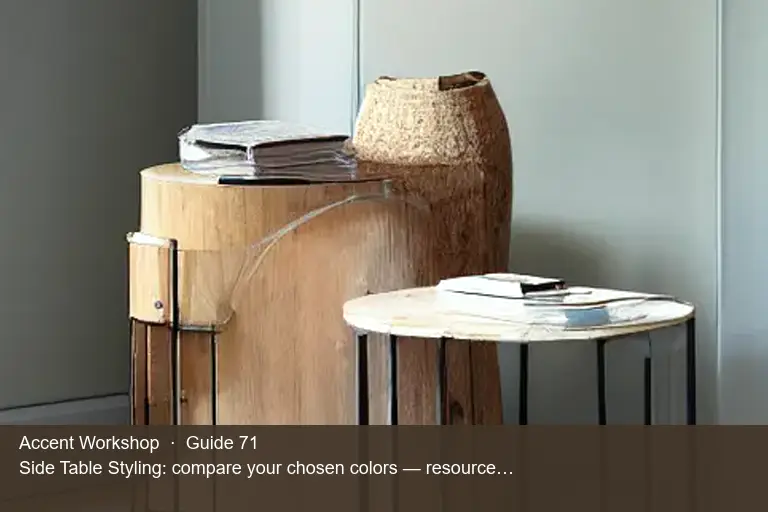
Side Table Styling: compare your chosen colors — resource budget for mixed item sizes; setup for a weekend project
**Side Table Styling: Compare Your Chosen Colors for Mixed Item Sizes**
**Introduction**
The side table is a staple in any home, offering a space where you can gather and entertain guests. When it comes to choosing colors for your side table, the key is to consider the mixed item sizes. This article will help you compare your chosen colors for side table styling, ensuring you make the best choices for mixed item sizes.
**Understanding Mixed Item Sizes**
Mixed item sizes are a common feature on side tables, often used to add a unique and stylish touch. These sizes often include items from different categories or styles. For example, a small side table might have a table lamp, a small table lamp, and a small lamp stand. To understand mixed item sizes, consider the following:
- **Category**: Consider the categories you are using your items from, such as lamps, tables, or plants. - **Size**: Decide whether you want to include items in different sizes or styles within a single category. - **Color**: The color of the items can be used as a reference to help you decide on the color of the table.
**Choosing Your Colors**
Once you understand your mixed item sizes, it's time to choose your colors. The colors you choose should be:
- **Bright**: To make your side table stand out. - **Neutral**: To avoid overwhelming the space. - **Bright and neutral**: For a balanced look.
**Color Choices for Side Tables**
Here are some color choices that work well for side tables:
- **Muted colors**: Yellow, green, or white can be used to make your side table a warm and inviting space. - **Neutral colors**: White, black, and grey can be used to create a clean and simple look. - **Bright colors**: Yellow, green, or white can be used to make your side table stand out, but it's important to maintain a balance and avoid overwhelming the space.
**Styling Your Side Table**
When choosing colors, it's important to consider the overall look and feel of your side table. The colors you choose should be:
- **Color coordination**: To create a cohesive look, choose colors that complement each other. For example, use yellow and white to create a warm and inviting space. - **Color contrast**: To make your side table stand out, choose colors that contrast with each other.
**Example: Mixed Item Sizes**
Let's consider an example to see how you can use your mixed item sizes to create a side table with a unique and stylish look. Consider the following mixed item sizes:
- **Lamp**: A small table lamp. - **Table Lamp**: A small table lamp. - **Lamp Stand**: A small lamp stand.
**Color Choices for the Mixed Item Sizes**
Here are some color choices that work well for the mixed item sizes:
- **Muted colors**: Yellow, green, or white can be used to make the side table a warm and inviting space. - **Bright colors**: Yellow, green, or white can be used to make the side table stand out, but it's important to maintain a balance and avoid overwhelming the space.
**Conclusion**
In conclusion, side tables are a great addition to any home, offering a space where you can gather and entertain guests. By choosing colors that complement each other and create a cohesive look, you can create a side table with a unique and stylish touch. Remember, the best color choice is one that makes your side table stand out, but it's important to maintain a balance and avoid overwhelming the space.